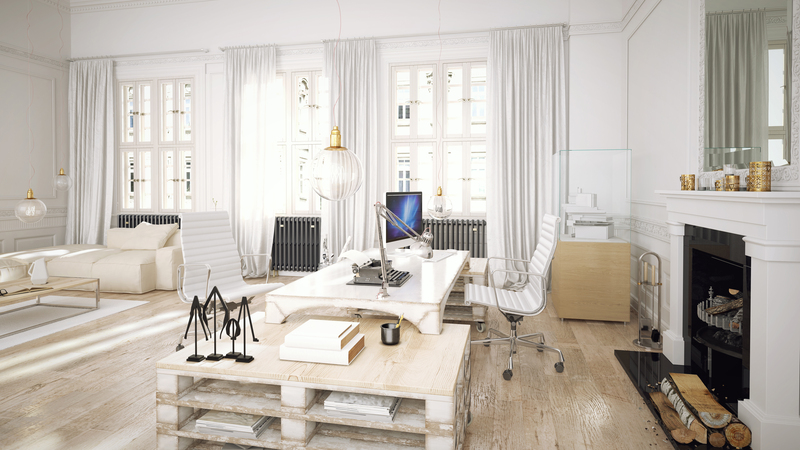
Office Clearance in Greenwich

Office clearance in Greenwich means clearing desks, chairs, filing cabinets, meeting-room furniture and general workplace items in a way that keeps the move, closure or refurbishment on track. We provide a practical service for businesses that need rooms emptied methodically rather than left with a mixed pile of equipment and paperwork. The work can include separating reusable items from general waste, handling bulky furnishings and removing unwanted contents from occupied or vacated premises.
Our approach is designed for offices that need tidy, organised clearance with sensible attention to access, building rules and the sequence of removal. That might involve a single room, a suite of rooms or a larger workplace where furniture, archive material and redundant equipment all need different treatment. Clear planning helps keep the site manageable, and it also makes it easier to decide what stays, what goes and what needs extra care during removal.
Start with the areas that matter most, then ask for a quotation when you are ready. If you already know the broad scope, we can shape the clearance around that. Tell us what needs clearing and we can guide the next step.
Office furniture and workstations

Desks, task chairs, screens and storage units often make up most of an office clearance. These items can be awkward to move if they are built for heavy daily use, fixed in clusters or placed close to walls and cable runs. We remove furniture with an eye on the practical details that affect the job, including access routes, floor protection and the order in which larger items should come out. That keeps the space workable while the clearance is underway.
Different workplaces have different priorities. Some want items taken out for disposal, while others need usable furniture separated for possible reuse or redistribution. We can work through those decisions with you before removal begins so the right items are handled in the right way. Where there are meeting tables, storage cupboards or reception pieces, it is often sensible to group them by area rather than treating every item as a separate task.
When a clearance is planned well, the result is easier to hand over, reconfigure or fit out again. That is especially helpful when several teams have used the same office over time. If you want to make a firm plan, a short call for a quotation can be the simplest next step.
Clearance of equipment, filing and mixed contents
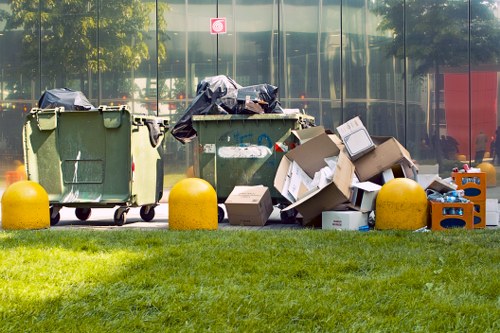
Many offices contain more than furniture. Filing cabinets, archive boxes, shelves, printers, monitors and assorted supplies can all build up in storage rooms or underused corners. A useful clearance service needs to deal with those mixed contents in a sensible sequence, rather than shifting only the obvious bulky items. We can clear general office contents alongside furniture, which helps when a space needs to be emptied in full or prepared for another use.
There may also be items that call for more careful sorting. Old paperwork, branded material, packed stationery and obsolete equipment can each need a different route through the process. In practical terms, that means taking time at the start to decide what should be retained, what is ready for removal and what must be kept separate until you have finished reviewing it. A steady process is usually better than a rushed one, especially where rooms contain several kinds of office property together.
Useful preparation can stay simple. A clear list of the main rooms, any access constraints and the items you already know are going makes quotation easier. Photos or a basic inventory can help, but they are only part of the picture; the main thing is to describe the work accurately. Then you can request a quotation with confidence.
Business clearances, closures and refurbishments
Office clearance is often tied to a change in the business itself. A company may be closing a floor, moving to different premises, reducing the amount of fitted storage or preparing for decorators and contractors. In those situations, the clearance has to sit neatly within the wider schedule. We can work around the practical sequence needed to empty rooms before the next stage of work starts, which helps avoid unnecessary overlap between trades.
Commercial clearances can also involve several decision-makers. Facilities teams, landlords, office managers and staff may each have different priorities about what stays in place and what needs to go. A clear scope at the beginning can reduce confusion later, particularly when the work includes more than one department or floor. For that reason, it helps to identify the areas involved, the likely volumes and any items that need special handling before removal takes place.
If you are preparing a workplace change, it can help to compare the main items first and then move on to the finer details. Once the scope is defined, the clearance tends to run more smoothly. Use the time to gather the essentials, then ask us for a quotation when you are ready to proceed.
Planning access, timing and site rules
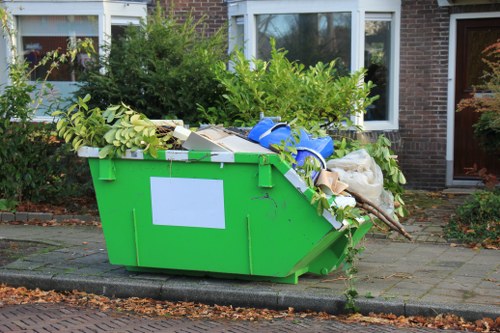
Office clearance work is rarely just about lifting and carrying. Access arrangements, loading points, lift use, shared entrances and building rules all affect how the job is organised. Where a site has narrow corridors or busy common areas, the clearance has to be planned so it causes as little disruption as possible. That may mean working in stages, keeping walkways clear or removing the largest items first so the remaining space can be handled more easily.
Timing matters too. Some offices need work arranged outside normal hours, while others prefer the clearance to fit around staff presence or contractor activity. We can discuss the practical order of the work so the room or floor is handed over in a useful state. It is often worth identifying any restricted areas, parking limits or keyholder arrangements early, because those details can influence how the clearance is scheduled.
A useful quotation request does not need to be complicated. A brief description of the rooms, the main contents and any access limitations is usually enough to begin with. If you are comparing options, ask for a quotation once the basics are clear and you can choose the timing that works best.
Recycling, reuse and responsible disposal

A good office clearance should not treat every item the same way. Furniture, metal filing units, mixed office contents and some equipment may be suitable for different handling routes, depending on condition and composition. We work with the aim of separating items sensibly where possible, so the clearance is not reduced to one single pile and one single outcome. That makes the process more orderly and can help when the space contains both reusable and non-reusable items.
Responsible handling also matters because offices often contain material that has been gathered over many years. Shelving, broken chairs, redundant peripherals and boxed paperwork can sit together in storage areas until they are all due to go. Sorting those contents carefully helps keep the work controlled and allows the right items to be removed in the appropriate way. Where there is a mix of materials, the clearance can be adjusted around what is present rather than forcing everything through the same route.
If sustainability is part of your decision, it is sensible to ask how different categories of office items will be managed. That can be discussed as part of the quotation process, along with the scope of the rooms and any site restrictions. A clear plan at the start usually makes the end result easier to understand and easier to hand over.
Office clearance quotations and practical pricing
Pricing for office clearance is normally shaped by the amount of material, the type of items involved and the access available on site. A room filled with lightweight contents is different from a floor containing heavy desks, cabinets and storage units. In the same way, a straightforward ground-floor collection is not the same as a clearance involving stair access, controlled building entry or items that need more careful separation. The more accurately the work is described, the easier it is to prepare a useful quotation.
It is usually helpful to set out the main factors in plain terms: how many rooms are involved, what sort of furniture and contents are present, whether anything needs to stay in place and whether there are time constraints. We can use that information to shape a quotation around the work rather than around guesswork. If there are particularly bulky items, archive material or mixed office contents, mentioning them early helps the estimate reflect the actual job.
For many customers, the easiest next step is simply to gather the essentials and ask for a quotation. If the scope changes, the plan can usually be adjusted before the work begins. That gives you a clearer basis for deciding how to move forward and what level of clearance best suits the premises.
Preparing your office for clearance
There are a few simple steps that can make office clearance more straightforward. Identifying the rooms involved, separating anything that must remain, and noting any locked areas or shared spaces all help set the job up properly. Where the office contains personal items, confidential papers or equipment that needs review, it is sensible to organise those decisions before the removal stage begins. That prevents avoidable pauses while the clearance is underway.
Good preparation also means deciding who will be the main point of contact. In larger workplaces, several people may have an interest in the same rooms, so one agreed contact can keep the process clearer. It can also help to flag matters such as lift times, loading arrangements and any health and safety rules on site. The aim is not to add complexity, but to make sure the work fits the premises and the schedule.
Keep the instructions simple and specific, then send them with your enquiry. A short summary of the site, the contents and the timing you need is usually enough to begin. Once that is done, you can request a quotation without unnecessary back-and-forth.
What a typical office clearance may include
Office clearances can cover a wide range of contents, and it is useful to think in terms of categories rather than single items. The following examples are commonly part of the work:
- desks, chairs and meeting tables
- storage units, filing cabinets and shelving
- printers, monitors and small office equipment
- archive boxes, stationery and general room contents
Some clearances focus mainly on furniture, while others involve a more complete emptying of rooms and storage areas. The right scope depends on the premises and on the reason for the job. A partial clearance can support refurbishment or reorganisation, whereas a fuller service may be more suitable for a move or closure. The useful thing is to decide on the level of clearance that fits the site, rather than trying to fit the site to a fixed pattern.
If you are unsure how much needs removing, that can still be discussed before any work is arranged. A short description and a few notes on the rooms involved are often enough to start. Then you can request a quotation once the service level is clear.
About Greenwich
Greenwich is a historic district in south-east London on the south bank of the River Thames, known for its strong maritime associations and for the way its built environment combines different centuries of development. The area forms part of the Royal Borough of Greenwich, and much of its identity is tied to the riverside setting, the hill rising away from the water, and the long-established institutions clustered around the old town centre. Greenwich Park, one of London’s oldest enclosed royal parks, sits above the river and provides wide views across the city, while the nearby Cutty Sark and the Old Royal Naval College remain among the best-known landmarks. The college, originally founded in the late 17th century and later designed in part by Sir Christopher Wren, is a key feature of the riverside landscape and gives the area a formal architectural focus. Greenwich Market adds a more compact and everyday character, with covered trading spaces and surrounding streets that connect the historic core to the modern town centre. The Prime Meridian at the Royal Observatory is another defining feature, linking the place to world time and navigation. Greenwich also has a strong transport identity through the Docklands Light Railway, river services and rail links, which connect the area to other parts of London while preserving its distinct riverside atmosphere. As a place, Greenwich balances tourism, residential streets, academic and cultural institutions, and historic public spaces, making it one of the capital’s most recognisable districts.
Clearance for offices and workplaces of different sizes
Office clearance needs vary widely between a compact workspace and a larger commercial floor. A smaller office might only need furniture and a few storage pieces removed, while a bigger site may include multiple meeting rooms, shared filing areas and back-office stores. The important point is to match the clearance to the scale of the premises, so the work feels orderly rather than overcomplicated. We can help with both focused removals and broader clear-outs where several parts of the workplace need attention.
In some cases, the most useful option is to clear one area first and deal with the rest separately. That can work well when teams are still using part of the premises or when a refurbishment is happening in stages. It is often easier to manage a clearance in sensible phases than to attempt everything at once. Where a site is being reorganised, that staged approach can also leave the remaining rooms in better condition for normal use.
When you are ready to move forward, the best approach is to outline the rooms, the broad contents and the time frame. Then ask for a quotation so the next step is based on the real scope of the work. A clear brief helps keep the process efficient from the start.